


Message from Kwan Jang Nim
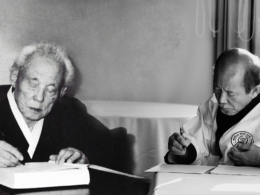
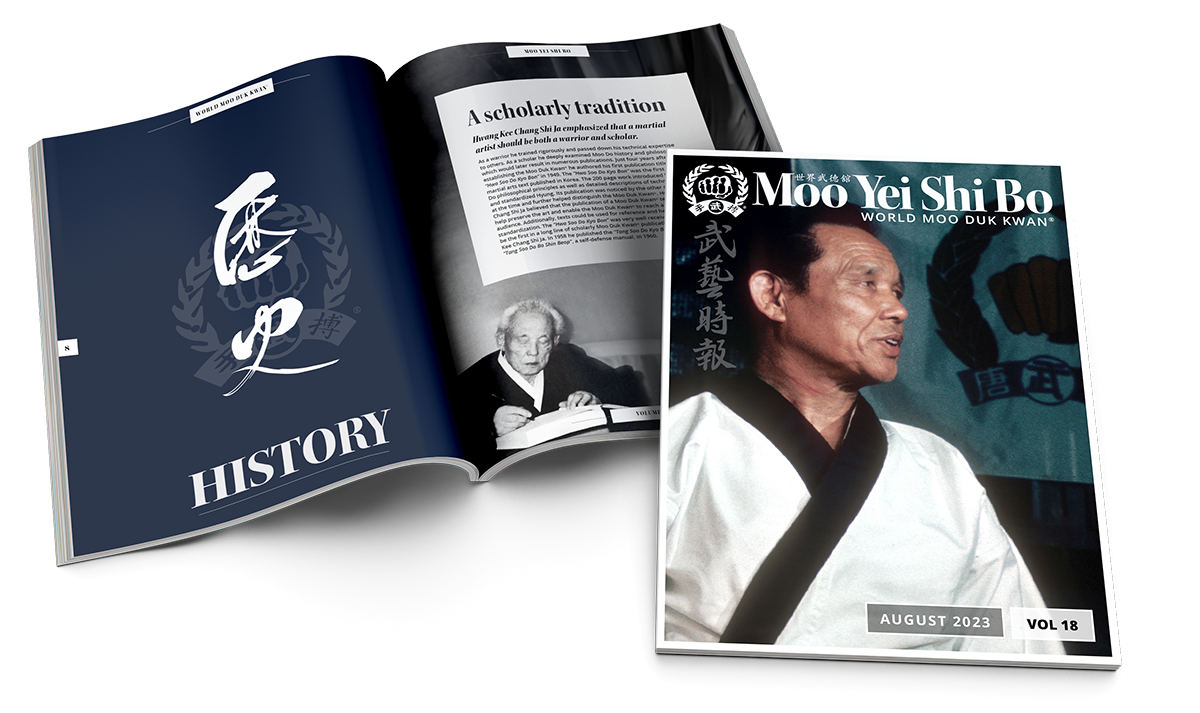
Greetings to all Moo Duk Kwan® practitioners, supporters and future members. I hope this year has been happy and productive for you and your loved ones. There is a proverb pertaining to knowledge that states, “when you hear it, you forget it; when you see it, you remember it; when you do it, you know it”. I would like to add two more components to this saying; knowledge through experience and repetition lends to understanding; understanding that is accompanied with experience cultivates wisdom. As students we know that we forget much of what we learn, especially if what we have learned is not applied. We as Moo Do In are constantly in pursuit of knowledge and understanding and are finally rewarded, hopefully in time, with wisdom. This wisdom then facilitates living a good and happy life free from conflict. If this pursuit is sincere. A life that is grounded in the many aspects of virtuous living, which is the central character of the Moo Duk Kwan® principles (institute of martial virtue) as established by the Founder. As in our training, applying philosophy (inside) to our lives takes practice and repetition to achieve masterly action (outside). Earlier this year the theme
Read More »
Moo Yei Shi Bo Update
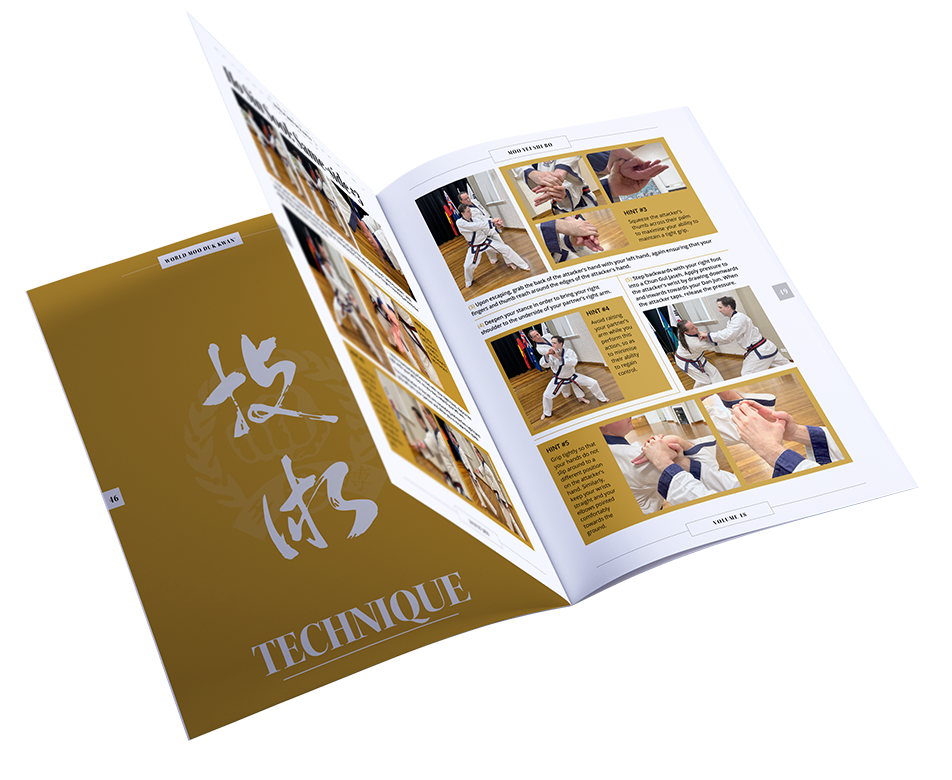
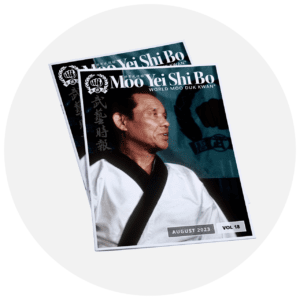
Volume 18 of the Moo Yei Shi Bo; the official newsletter of World Moo Duk Kwan®. When the founder of the Moo Duk Kwan®, Hwang Kee, Chang Shi Ja published the first Volume in September 1960, he could never have known where we would be some 63 years later. We can however suspect that he would have fully embraced modern technology and the opportunities that we now have for sharing the Art that he devoted his life to. While Hwang Kee CSJ initiated this project, the political influences of the times prevented him from continuing it. Fast-forward 60 years and into the depths of a global pandemic, our generation of Moo Duk Kwan® practitioners developed a desire and identified a method to reinvigorate his dream and use it to strengthen our own connections to the Art and to each other. We are now the into the third year, and the tenth volume, since the reintroduction of the Moo Yei Shi Bo in May 2021. You will have noticed that we have introduced a new style and design. Like Soo Bahk Do, the Moo Yei Shi Bo is a living art; it will continue to grow and evolve with us, supporting
Read More »
History: A scholarly tradition
Hwang Kee Chang Shi Ja emphasized that a martial artist should be both a warrior and scholar. As a warrior he trained rigorously and passed down his technical expertise to others. As a scholar he deeply examined Moo Do history and philosophy which would later result in numerous publications. Just four years after establishing the Moo Duk Kwan® he authored his first publication titled the “Hwa Soo Do Kyo Bon” in 1949. The “Hwa Soo Do Kyo Bon” was the first modern martial arts text published in Korea. The 200 page work introduced Moo Do philosophical principles as well as detailed descriptions of techniques and standardized Hyung. Its publication was noticed by the other schools at the time and further helped distinguish the Moo Duk Kwan®. Hwang Kee Chang Shi Ja believed that the publication of a Moo Duk Kwan® text would help preserve the art and enable the Moo Duk Kwan® to reach a larger audience. Additionally, texts could be used for reference and help improve standardization. The “Hwa Soo Do Kyo Bon” was very well received and would be the first in a long line of scholarly Moo Duk Kwan® publications by Hwang Kee Chang Shi Ja. In
Read More »
Tradition: Honoring our traditions
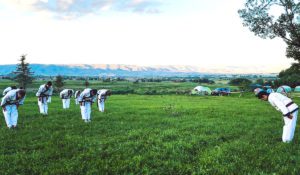
I recently lost my last living grandparent, Amabel Corrales. She was 98 years old, a strong Christian woman from the San Ildefonso Pueblo in the southwestern part of the United States. In her later years, she would tell my children about how her and her daddy would “drive” up to their farm in the mountains by a horse-drawn cart. As a child, she would roll out tortillas over an outdoor open flame. This became a Corrales family tradition that she passed on to her children, her grandchildren, and now I am passing it on to her great grandchildren. To others, it may seem a simple thing. You can buy tortillas in the grocery store for a few dollars after all. The full meaning and value behind this family tradition didn’t hit me until the day before my grandmother’s funeral when my aunt made dinner: beans, pork chili verde, and homemade tortillas. My heart was overwhelmed with emotion at that moment as my thoughts went to my grandmother who showed me by example strong Christian virtues and the importance of hard work. Simple, outward traditions can be tangible reminders (yu sang) of intangible virtues (mu sang). These traditions and virtues help
Read More »

The Integrated Communications System
Kwan Jang Nim H.C. Hwang has recently approved a plan that will improve the dissemination of official World Moo Duk Kwan® correspondence among the member country organizations. The program, led by Larry Seiberlich Sa Bom Nim, is titled the Integrated Communications System (ICS), which was presented at the World Symposium this past June. The intent of the plan is to improve the release of official correspondence across all World Moo Duk Kwan® sites to better integrate the consistency and content of messages and publications. To bring the ICS to life, the next step will be the selection of country National Communications Directors who will be oriented and trained to process communications through routing protocols that ensure the quality and appropriateness of official Moo Duk Kwan® correspondence. Specifically, the ICS Plan addresses several issues that will benefit all member Federations. The following is a brief synopsis of the plan’s intent. The ICS Plan exists to support and manage official information flow across all 23 Moo Duk Kwan® nations and will be supported by the ICS via National Communication Directors. These Directors will be proactive by assisting, guiding, and authorizing official national publications across all social and official communications. This will ensure
Read More »
Philosophy: Moo Do Shim Gong
The concepts of Weh Gong, Neh Gong, and Shim Gong are very familiar terms to us as Soo Bahk Do Moo Duk Kwan® Moo Do In. They are reflected throughout the Moo Duk Kwan® curriculum and expressed in our rich culture as philosophical wisdom that is the basis for technical and philosophical actions. They are introduced and emphasized within the curriculum in steps that build incrementally through the levels of our ranking system. Generally speaking, Weh Gong is the focus for Gup members, while Neh Gong aspects of emphasis are targeted for Dan members. Shim Gong aspects of our training then focus on Ko Dan Ja practitioners, each at the appropriate level. This article is meant to provide a better clarification of what Shim Gong is and how to strengthen it within each Soo Bahk Do practitioner. The use of Huh Ri (waist/hip) is the key element to strengthen Weh Gong in our training. Ho Hoop (breathing) is the key element to strengthening the Neh Gong. It provides clear direction for us to apply through steps a basic organization and dispersion of energy when demonstrating Soo Bahk Do technique. The mind is the primary focus for Shim Gong training and
Read More »
Heritage Program: Finding a home in the martial arts
안녕하십니까 [Hello] My name is Su-Pyo Einsiedler née Lee. I was born in Seoul, Korea in 1976 and grew up as a common Korean woman. My parents taught me and my younger sister to be kind, polite, obedient, and intelligent to be a good mother and wife in the future. I studied and worked hard not to disappoint my parents and later at schools I was beloved by every teacher. Nothing seemed to be impossible for me to achieve the wish of my parents, and I was very proud of myself being the daughter of my parents. I learned how to draw, play the piano and calligraphy, things which every young girl in Korea spent time on as hobbies, to be skillful, tamed and calm. Physical training wasn’t a thing required to be a good mother and wife. I was, frankly, non-athletic, no need to say anything about martial arts, until I was already living in Germany for more than 18 years and my second child was one year old, me 40. I couldn’t hold my son as long as I wanted or bear his weight when he lay on my belly. My body had no strength and my mental
Read More »
Instructor Insights: What does it mean to be a real leader?
The wise leader does not display saintliness or award titles of good conduct. This would create a climate of successes and failures, which gives rise to competition and envy. The same thing happens when emphasizing material success: those who have a lot become greedy, and those who have little become thieves.
Read More »